Specialties: Painless stone treatment: Extracorporeal shock wave lithotripsy, minimally invasive flexible ureteroscopy, urination disorder assessment, laser surgery, Rezum lift, new type of circumcision gun, incisionless ligation, da Vinci hernia repair.
Benign
prostatic hyperplasia (BPH), also called prostate enlargement, is a very common
condition in middle-aged and older men. It is a benign condition.
What is BPH?
The
prostate is a male organ located below the bladder and around the urethra, that
carries urine out of the body. Its function is to produce fluid that helps
protect sperm.
As men get
older, the prostate may gradually enlarge. This enlargement can press on the
urethra and make urination more difficult. Aging, obesity, and Western-style
dietary patterns are described as contributing factors.
How common is it?
The article
states that about half of men older than 50 have this condition, and the rate
rises to around 70% by age 70.
Common symptoms
BPH
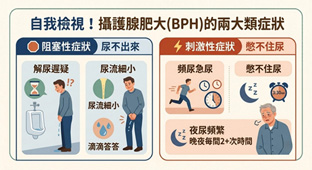
symptoms are often divided into two groups.
1. Obstructive symptoms
These
symptoms happen when urine has trouble passing through the urethra:
·
Hesitancy.
·
Intermittency.
·
Weak stream.
·
Incomplete emptying.
·
Dribbling after urination.
2. Irritative symptoms
These
symptoms are related to bladder irritation or poor bladder control:
·
Frequent urination, more than 8 times a day.
·
Sudden desire to
urinate.
·
Waking up 2 or more times at night to urinate.
Doctors
often use the International Prostate Symptom Score (IPSS) to assess severity:
0–7 is mild, 8–19 is moderate, and 20–35 is severe.
How is BPH evaluated?
A urologist
may use several methods to assess BPH:
·
Medical history and symptom review.
·
Digital rectal examination to check the size and firmness of the
prostate.
·
Urinalysis to rule out infection.
·
Ultrasound and urine flow testing to measure prostate size and
evaluate urination.
Does everyone need surgery?
No. Not all patients need surgery,
and about half of patients can improve with medication alone.
Mild symptoms
Patients
with mild symptoms may only need observation, lifestyle adjustment, and regular
follow-up.
Moderate symptoms
Medication
may be used, including drugs that relax the bladder outlet and drugs that
reduce prostate size.

Severe symptoms or
complications
Surgery or
minimally invasive treatment may be needed if BPH causes complications such as:
·
Acute urinary retention.
·
Overflow incontinence.
·
Bladder degenerative change.
·
Recurrent bleeding or infection.
·
Bladder stones.
·
Kidney function deterioration.
Treatment options
Standard endoscopic surgery
·
TURP
(transurethral resection of the prostate): a standard surgical
treatment covered by Taiwan’s National Health Insurance.
·
Laser prostate
surgery: Reduce
bleeding risk and may be useful for older patients, patients with chronic
illness, or those taking blood thinners.
Minimally invasive options
·
Urolift: uses
implants to pull prostate tissue away from the urethra and can help preserve
ejaculation function.
·
Rezum: uses hot
water vapor to destroy enlarged prostate tissue to induce necrosis, which is
later absorbed by the body.
Prostatic artery embolization
(TAE)
TAE uses
catheter-based techniques to reduce blood supply to the prostate. Current guidance generally
considers its long-term results and urine flow improvement somewhat less
favorable than resection or laser surgery, so it is not usually a first-line
treatment.
Daily self-care tips
The article
recommends the following daily habits to support prostate health:
·
More
vegetables and fruits.
·
Reduce animal fat and red meat.
·
Drink enough water during the day, but drink less after dinner,
including soup.
·
Avoid alcohol and spicy foods.
·
Bladder
training.
·
Cooked tomatoes may help increase lycopene intake.
Important medication warning
Some cold
or allergy medicines, such as antihistamines, may make urination worse and can
even trigger sudden urinary retention. Patients should tell their doctor that
they have BPH before taking new medications.
When to see a doctor
See a
urologist if urination problems affect daily life, sleep, or quality of life.
Prompt evaluation is also important if there is inability to urinate, blood in
the urine, repeated urinary tract infections, or worsening bladder symptoms.
Frequently asked questions
Is BPH the same as prostate
cancer?
No. BPH is
a benign enlargement and is not the same as prostate cancer.
Can BPH improve without
surgery?
Yes. Many
patients improve with lifestyle changes or medication, and only some need
surgical treatment.
How can
prostate health be maintained?
The article
recommends healthy weight control, more fruits and vegetables, less alcohol and
high-fat food, enough daytime water intake, less drinking at night, and regular
follow-up.