Walking into the operating room area of a hospital, one's impression
might consist of rows of tightly closed heavy doors, cold and precise
instruments, and medical staff rushing by with serious expressions. In a
high-pressure environment that is a race against time and is critical to life
safety, every minute and every second in the operating room makes people feel
incredibly tense. However, behind this compact work rhythm, nurses in the
operating room not only need to utilize a high degree of expertise to assist
physicians with surgeries and monitor patient conditions, but they also have to
face an "invisible physical marathon" every day. To alleviate the
pain points of physical and mental tension as well as the heavy workload of
frontline medical colleagues, Far Eastern Memorial Hospital has quietly
welcomed several special new employees in recent years. They have no tears of
exhaustion and do not fear heavy journeys, silently shuttling through the
operating room corridors. They are the "robot teammates" of the operating
room!
The scale of the operating room at Far Eastern Memorial Hospital is
massive, houses a total of 28 operating rooms. Due to its long and narrow
design, the longest distance is approximately 220 meters, which is equivalent
to running half a lap around a track field! In such a vast space, it poses a
tremendous physical test for the nurses in the operating room who are
responsible for managing various medical supplies, medications, and maintaining
safety.
In the past, due to changes in a patient's condition, when a certain
medical consumable, special surgical instrument, or even blood products and
medications were urgently needed on short notice, nurses had to fetch them
immediately. The walk from the furthest operating room to the nursing station
is about 150 meters one way! Imagine that each nurse in the operating room has
similar item-retrieval needs about 10 to 15 times a day. More than 140 nursing
colleagues in the operating room consume a significant amount of time every day
traveling back and forth to retrieve items. When nurses are forced to leave
briefly to fetch items, not only do they experience sore legs and physical
fatigue from running back and forth, but they also bear considerable mental
stress, constantly worrying about the shortage of hands in the operating room.
Over the long term, this high-intensity workload has left many nursing
colleagues physically and mentally exhausted.
To resolve this clinical dilemma, the operating room at Far Eastern
Memorial Hospital planned the operating room "Robot Teammate" project
with assistance from the Ministry of Health and Welfare's Health Taiwan Sprout
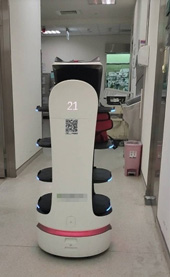
Program. Now, when an operating room temporarily requires supplies such as
antibiotics, blood products, or sandbags, nurses no longer need to run and sweat.
Colleagues at the nursing station or supply management area simply place the
items into the delivery robot and lightly tap the screen; the robot will
automatically plan the optimal route, skillfully dodge pedestrians and
obstacles on the path, hum music, and safely deliver the items to the door of
the operating room! In the dead of night, commercial robotic vacuums take
charge of routine floor cleaning across large areas like administrative zones,
greatly reducing the administrative and daily chore burdens on nurses and the
operating room cleaning team.
Since the robot partners joined to help, nursing colleagues have
happily expressed that "the workload has been reduced" and "we
no longer need to constantly run errands and can focus more on looking after
patients." According to a survey, not only has the fatigue level of the
nurses successfully dropped from moderate fatigue to mild fatigue, but their
job satisfaction in the operating room has also increased significantly! More
importantly, the workplace environment has become more considerate, which helps
retain outstanding rsing talent, successfully retaining many warm operating
room nursing partners.
Far Eastern Memorial Hospital’s steps to safeguard patients and the
health of the medical workplace have never stopped. With the strong support,
collaboration, funding, and policies of the Ministry of Health and Welfare's
Health Taiwan Sprout Program, we can accelerate the introduction of these smart
robotic devices with less worry. In the first phase of the project, with the
financial assistance of the Ministry of Health and Welfare's Sprout Program, we
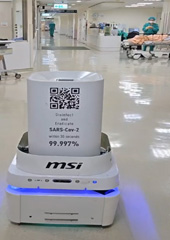
introduced the latest automated disinfection robots. These robots can
automatically enter the operating rooms during intervals between surgeries or
late at night to perform deep purification, making infection control and
prevention even more seamless. This not only gives the public preparing for
surgery extra peace of mind but also provides medical colleagues with a safe
and healthy working environment. And this is not the end! We further plan to
continue seeking support from the Ministry of Health and Welfare in the
upcoming second phase of the Health Taiwan Sprout Program, turning our
attention to the most burdensome link in the operating room—the transportation
of surgical case carts. Every surgery requires the preparation of extremely
heavy surgical instrument packs and consumables. In the subsequent second-phase
implementation plan, we expect to introduce smart transport robots capable of
moving case carts. It will take over the heavy labor by automatically
transporting heavy instrument carts to designated operating room locations
before surgery and assisting in transporting them back to the supply center
after surgery. In this way, nursing personnel will no longer need to expend arm
and waist strength to push and pull heavy objects, completely bidding farewell
to the risks of occupational muscle injuries.
The introduction of smart robots is not intended to replace humans
with cold machines; on the contrary, it is to liberate medical staff from
repetitive manual labor, allowing them to return to the essence of nursing and
provide warm care to patients. When robot partners are stationed with the
assistance of the Ministry of Health and Welfare's Sprout Program to help fetch
items, sweep floors, disinfect, and even push heavy instrument carts in the
future, the time and physical energy saved by nurses can be transformed into
that gentle strength of holding a patient's hands before surgery, into patient
explanations and comfort, and into more focused, meticulous clinical care in
the operating room.
Far Eastern Memorial Hospital will continue to upgrade through
technology, making smart equipment the solidest backing for medical staff, and
bringing a safer, more efficient, and warmer medical experience to every
citizen who comes for medical treatment.