Enjoy Zongzi Without Overindulging
Nutrition Department Chief Nutritionist Sun Wenhui

The Dragon Boat Festival is an important traditional holiday in Taiwan,
and eating zongzi (sticky rice dumplings) is an essential part of the
celebration. However, overeating or improper food combinations can lead to
indigestion, as well as poor blood sugar and weight control after the
festivities. So how can we enjoy various types of zongzi without burdening our
health? By following the tips below, you can celebrate the festival in a
healthy and joyful way!
1. Be Mindful of Portion Size and Ingredients
Understand the “value” of different types of zongzi. Their calorie content
depends on size, filling, and cooking method:
- Northern-style
zongzi (about 500–600 kcal each):
The glutinous rice is stir-fried in oil before steaming, giving it a
distinct texture. However, the oil absorption makes it higher in calories.
- Southern-style
zongzi (about 450–500 kcal each):
Made with raw rice and boiled in water. Though not stir-fried, fillings
like pork, salted egg yolk, and peanuts still contribute significant
calories.
- Cantonese
lotus leaf zongzi (up to 1000–1500 kcal each):
Large with rich fillings—one can exceed the calories of two boxed meals.
Best shared among several people.
- Dessert
zongzi (sweet or alkaline types):
- Red
bean paste zongzi: about 280–400 kcal, high in sugar
- Alkaline
zongzi: about 140–200 kcal, but dipping in sugar or honey greatly increases
calories
2. Choose Healthy, Eat Smart
- Replace
staple foods; limit to one per day
Zongzi should replace rice or noodles in a meal. Limit intake to one per
day. For those managing weight, choose smaller portions or share with
others.
- Vegetables
are the best companion
Dietary fiber reduces fat absorption, aids digestion, and increases
satiety. Since zongzi lack fiber, pair each meal with at least 0.5–1 bowl
of vegetables or a light vegetable soup.
- Enjoy
the original flavor; use sauces sparingly
Sweet chili sauce, soy paste, and sugar are high in sodium and sugar.
Zongzi are already seasoned—try them plain first. If using sauce, dip
lightly instead of pouring, or use natural aromatics (garlic, ginger,
scallions, chili) to reduce sodium and sugar intake.
- Modify
ingredients for healthier homemade zongzi
- Grains: Replace part of the glutinous rice with brown rice, oats,
buckwheat, or quinoa to increase fiber and stabilize blood sugar.
- Fillings: Use lean meat, chicken, tofu, or edamame instead of fatty pork
belly; replace salted egg yolk with chestnuts, sweet potatoes, or quail
eggs.
- Texture: Add high-fiber ingredients like mushrooms, wood ear fungus, or
bamboo shoots.
- Fruits
and light activity after meals
Fruits rich in enzymes (kiwi, pineapple, papaya) help digestion. Avoid
lying down immediately after eating—take a walk or do light activity to
aid digestion and burn calories.
3. Choose Zongzi Wisely for Chronic Conditions
- Diabetes:
Glutinous rice has a high glycemic index (GI), causing rapid blood sugar
spikes. Choose whole-grain zongzi and eat vegetables first to reduce blood
sugar fluctuations. Avoid sweet fillings like red bean or lotus paste due
to high sugar and fat.
- Hyperlipidemia:
Avoid zongzi with fatty pork or lard-based fillings. Those with high
triglycerides should also avoid sweet zongzi.
- Hypertension
& cardiovascular disease:
Choose low-sodium options and avoid processed fillings (pickled radish,
salted egg yolk, ham). Limit sauces to reduce sodium intake.
- Chronic
kidney disease:
Follow a low-protein, low-sodium, low-potassium, low-phosphorus
diet. Avoid sauces and watch fillings such as salted egg yolk, dried
shrimp, and cured meats (high in sodium and phosphorus).
Whole grains, peanuts, and lotus seeds are high in phosphorus—consult a
doctor or dietitian. Sometimes plain glutinous rice zongzi may be more
suitable. Vegetables should be blanched to reduce potassium before
cooking.
- Gout
or hyperuricemia:
Avoid excessive intake of squid, scallops, abalone, and mushrooms.

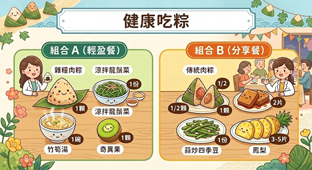
4. Healthy Meal Combinations
To create a more balanced Dragon Boat Festival meal:
- Option
A (Light meal):
1 whole-grain meat zongzi + 1 serving of blanched vegetables + 1 bowl of
bamboo shoot soup + 1 kiwi
- Option
B (Shared meal):
? traditional meat zongzi + 2 slices braised tofu + 1 serving stir-fried
green beans with garlic + 3–5 slices pineapple
Conclusion
Eating zongzi during the Dragon Boat Festival is a cherished tradition and
a time for family gatherings. By remembering to eat smart, eat moderately,
and eat balanced, you can enjoy the holiday without compromising your
health. With proper portion control, healthier ingredient choices, balanced
meals, and increased physical activity, even individuals with chronic
conditions can savor both the flavors and the joy of the festival.