The recent news of the sudden passing of
the well-known actor, Tzu-Chun Fu, due to suspected acute leukemia complicated
by pneumonia and sepsis has shocked the public. Although we have no way of
knowing the details of his condition, this tragic outcome should serve as a
loud wake-up call, awakening many modern people who hustle for their lives and
work but forget to listen to their bodies. The "silent" and
"ruthless" nature of diseases reminds us that we must re-examine our
health management concepts, but we can also take this opportunity to understand
this often-stigmatized disease: leukemia.
Leukemia is a cancer that occurs in the
blood-forming organ—the bone marrow. Our bone marrow is the manufacturing
factory for blood cells, producing red blood cells that carry oxygen, white
blood cells that fight foreign pathogens, and platelets responsible for blood
clotting. When mutated hematopoietic stem cells in the bone marrow begin to
uncontrollably proliferate abnormal, immature white blood cells (i.e., cancer
cells), these leukemia cells will occupy a massive amount of space in the bone
marrow, causing normal blood cells to be unable to grow properly, which in turn
affects the functioning of organs throughout the body and immune defense
capabilities.
Clinically, leukemia can be divided into
"acute" and "chronic" based on the "speed of disease
progression," and the prognosis and treatment for both are vastly
different. Acute leukemia is more like the blood cancer people generally
imagine; the disease progresses rapidly and fiercely, and due to a significant
decrease in normal blood cells, symptoms like infections and bleeding easily
occur. Treatment primarily relies on chemotherapy, and depending on the disease
prognosis, a hematopoietic stem cell transplant may be required. In contrast,
chronic leukemia progresses more slowly; there may be no symptoms at all in the
early stages, and many patients even discover it entirely by accident through
routine health check-up blood tests. Current treatments for chronic leukemia
mainly involve oral targeted therapies, and early-stage chronic lymphocytic
leukemia can even be continuously observed without the need for treatment,
which is vastly different from the general impression of blood cancers. But
even with acute leukemia, although the chemotherapy process is more arduous,
compared to other difficult-to-cure systemic metastatic cancers, acute leukemia
has about a 40% chance of a cure. It is actually a highly treatable cancer,
very different from the stereotype that getting blood cancer is a terminal
illness. The recent case of entertainer Mr. Yu-Lin Shen, who returned to work
and served as a blood cancer ambassador after undergoing treatment for acute
leukemia last year, is the best example.
Following such news, many media outlets
often remind the public to watch out for related symptoms, such as unexplained
fever, bruises, inexplicable bone pain, or a lingering sense of extreme
fatigue. It is true that leukemia might present these symptoms (though not
necessarily all of them); however, relying solely on symptoms to determine if
one has leukemia (or any other disease) is highly inappropriate and difficult
for the general public. Because these symptoms are often
"non-specific," meaning many other conditions could also have these
types of symptoms. For instance, fatigue and a mild fever might just be a
common cold or overwork. If people immediately associate these common symptoms
with leukemia or certain diseases, it easily causes unnecessary panic and
anxiety. Conversely, the other extreme is "over-neglect," constantly
thinking that one is just recently tired or has poor immunity, casually taking
over-the-counter medications, or choosing to endure it, resulting in missing
the golden window for medical attention and treatment. Therefore, a more
practical approach is to establish a correct medical concept: "When the
body experiences persistent, unexplained, and lingering abnormal changes,
seeking professional medical assistance as early as possible is the most
crucial step". Leaving the responsibility of diagnosis to professional
medical personnel and scientific testing equipment not only avoids pointless
psychological torment but also precisely captures the subtle signals sent by
the disease. As for leukemia, besides the commonly mentioned high or low blood
cell counts, clinicians actually often observe the "white blood cell
differential count," determining the cause of blood cell changes by
analyzing whether there are abnormal white blood cells and their proportions.
Because leukemia is right there in the blood, theoretically, a blood test can
reveal the clues; it is actually a cancer that is not easily missed in
diagnosis, provided the premise is not to avoid seeing a doctor.
Furthermore, the diagnosis and treatment of
leukemia have officially entered a new era of "precision medicine,"
and next-generation sequencing (NGS) plays an irreplaceable, critical guiding
role (Figure 1). Through NGS technology, dozens or even hundreds of genes
related to leukemia (such as FLT3, NPM1,
CEBPA, TP53, etc.) can be comprehensively tested at once in a short time.
This is extremely important for judging the prognosis (which affects whether a hematopoietic
stem cell transplant is needed) and choosing many target therapies. And because
of the high sensitivity of NGS, it can also be used to monitor the presence of
a small number of cancer cells after treatment. Such concepts and technologies
have now been applied to the treatment of various other cancers as well,
gradually becoming indispensable information for current cancer treatment.
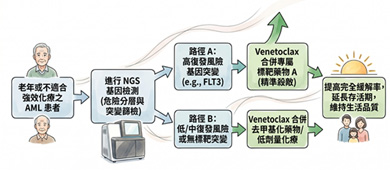
Regarding treatment, although acute
leukemia has a high chance of being cured through chemotherapy, the treatment
risks are indeed too high for the elderly or patients with other chronic
diseases like cardiopulmonary issues, which also limits the treatment efficacy
for these patients. Over the past decade, the emergence of many targeted drugs
has shed a light to the treatment of elderly patients. Taking acute myeloid
leukemia as an example, using the targeted drug venetoclax combined with
low-dose chemotherapy or hypomethylating agents can significantly reduce side
effects while achieving efficacy similar to systemic chemotherapy, allowing
populations traditionally unsuited for chemotherapy to achieve a major breakthrough
in treatment (Figure 2). Combined with NGS test results, doctors can also
consider combining other targeted drugs, and in the future, it may even have
the opportunity to replace some chemotherapy, further reducing treatment risks
(you can also refer to hospital newsletters issue 252 from November 2020 and
issue 310 from September 2025 for related introductions to acute
leukemia).
Returning to this incredibly regrettable
news event, although the disease progressed very quickly and there was not even
time to complete a definitive diagnosis, most of the time, leukemia is not as
terrifying as imagined. Instead, with current medical advancements, there are
increasing chances to fight against it. At the same time, however, it also
reminds us that the fragility of life always leaves people feeling caught off
guard and helpless. Regardless of age, we should establish a correct concept of
seeking medical attention; paying attention to persistent abnormal symptoms and
seeing a doctor promptly are the essential keys to protecting health.
Illustrations
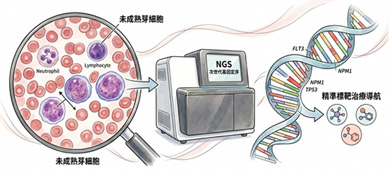
Figure 1 : Finding abnormal cells from a
peripheral blood smear, and then using NGS to deeply decode genetic mutations,
navigating the patient towards precise targeted therapy.