
Expertise: Minimally invasive flatfoot correction, minimally
invasive hallux valgus (bunion) correction, minimally invasive knock-knee (genu
valgum) and bowleg (genu varum) correction, foot and ankle arthroscopic
minimally invasive surgery, ligament repair and reconstruction, minimally
invasive Achilles tendon repair, total ankle arthroplasty, limb length
discrepancy correction and bone lengthening, pediatric/adolescent developmental
dysplasia of the hip (DDH) correction, and pediatric orthopedic trauma surgery.
More Than
a Cosmetic Issue—It’s a Health Crisis
Hallux Valgus (commonly known
as a bunion) is a frequent foot condition in modern times. It is characterized
by the outward deviation of the big toe, which causes the bone at the base of
the big toe (the first metatarsal) to protrude inward. This issue does not just
affect the appearance of the foot in shoes; it is often accompanied by
persistent pain, inflammation, and can even alter walking posture. Over time,
these gait changes can trigger a chain reaction of pain up into the knees,
hips, and spine. While many patients initially choose to endure the discomfort,
the deformity typically worsens over time, severely impacting their overall
quality of life.
Deep
Dive: Why Do Bunions Develop?
The causes of hallux valgus are
complex and usually stem from a combination of genetic predisposition and
lifestyle habits:
- Anatomical Structure and Genetics: Patients with flatfeet are highly susceptible to
bunions due to insufficient arch support and uneven weight distribution.
Furthermore, individuals with a family history of hallux valgus, naturally
long big toes, or hypermobile ligaments have a higher risk of developing
the condition.
- Long-term Lifestyle Habits: Prolonged wearing of high heels or narrow,
pointed shoes forces the toes into a cramped, compressed space. This is
the primary reason why the incidence rate is significantly higher in women
than in men.
- Medical Conditions: Autoimmune diseases like rheumatoid arthritis
can damage the joints, ligaments, and surrounding tissues, leading to
severe foot deformities.
- High-Risk Groups: Clinically, the condition is most prevalent in
women over the age of 40. However, it is also frequently observed in
adolescents who present with severe flatfeet.
From
Conservative to Proactive: Common Symptoms and Treatment Strategies
The progression of hallux
valgus varies by stage, and treatment strategies are adjusted accordingly:
- Typical Symptoms: Patients often experience swelling, redness, and
pain at the base of the big toe (bunionitis), along with numbness and
localized calluses caused by continuous friction. In severe cases, the big
toe crowds the second toe, forcing it to overlap and dislocate upward,
which ultimately compromises the entire structural integrity of the foot.
- Limitations of Conservative Treatment: In the early stages, symptoms can be managed by
switching to flat, wide-toed shoes, or by using toe spacers and bunion
splints. However, it must be emphasized that conservative treatments
cannot realign a bone that has already shifted; they can only slow down
the progression of the deformity.
- Timing for Surgical Correction: Surgery is recommended when visible deformity
and pain begin to interfere with daily walking and wearing shoes, when
recurrent calluses form, or when the second toe has already dislocated.
New
Trends in Medicine: The Advantages of Minimally Invasive Bunion Surgery
Compared to traditional open
surgery—which involves larger incisions, longer recovery times, and higher
recurrence rates—the Minimally Invasive Bunion Surgery performed at Far
Eastern Memorial Hospital offers several distinct advantages:
- Efficient and Precise Procedure: Performed under regional anesthesia, the
operation takes only about one hour. The skeletal alignment and angles are
precisely corrected through a series of tiny incisions.
- High Stability and Durability: Specialized titanium headless compression screws
are utilized for fixation during the procedure. This material offers
excellent biocompatibility and high strength. Because the screws are
countersunk directly into the bone, a second surgery for hardware removal
is not required.
- Rapid Recovery and Short Hospital Stay: Patients can practice walking with a specialized
post-op shoe on the very day of or the day after surgery. Discharging home
is usually possible within 1 to 2 days, significantly reducing the disruption
to daily life.
Managing
the Golden Recovery Period: Every Step Counts
Proper postoperative care is
essential to guarantee surgical success. Patients must strictly follow this
timeline:
- Days 1–2 Post-Op: Begin practicing walking and discharge home to
rest.
- Week 1 Post-Op: This is the initial stage of bone healing. The
surgical site must be immobilized with a plaster splint, and a toe spacer
must be used alongside a post-op shoe to ensure the toes stay in their
corrected alignment.
- Weeks 2 to Month 2 Post-Op: Once the splint is removed, patients transition
to alternating between a bunion splint and a silicone toe separator. At
this stage, you can begin gradually increasing your walking distance while
wearing loose-fitting shoes or your post-op shoe.
Frequently
Asked Questions (FAQ)
Q1: Is the surgery very painful?
A: With
advanced modern anesthesia and postoperative pain management techniques,
combined with the tiny incisions used in minimally invasive surgery,
postoperative pain is significantly milder compared to traditional methods.
Q2: How soon can I return to
work after surgery?
A: If you
work a desk job, you can usually return to work one week after surgery. If your
job requires prolonged standing or walking, resting for two weeks is
recommended. High-impact activities like running or dancing should be avoided
for 1 to 2 months until the bone has healed securely.
Q3: Can I still wear high heels
in the future?
A: It is
recommended to wait at least 3 months post-op until the foot structure is fully
stabilized before considering high heels. However, to prevent recurrence, it is
highly advised to wear comfortable, wide-toed shoes for daily routines and
reserve high heels only for necessary occasions and short durations.
Conclusion:
Give Yourself a Lighter, Pain-Free Future
Hallux
valgus should never be a stumbling block that keeps you from moving forward.
Through precise minimally invasive surgery and proper postoperative
rehabilitation, the vast majority of patients successfully reclaim their foot
health and step out into the world with renewed confidence and comfort. If you
are struggling with foot deformities or pain, you are welcome to visit our
orthopedic clinic for a professional evaluation. Figure Captions |
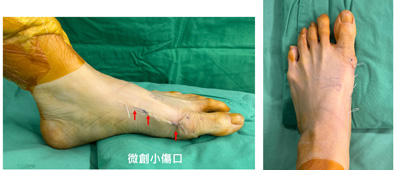
Figure 1: Surgical Incisions (Minimally Invasive Tiny Incisions) |
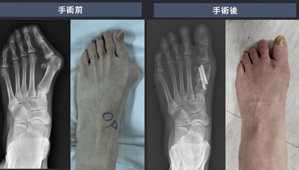
Figure 2: Pre-operative vs. Post-operative X-rays and Foot Appearance |
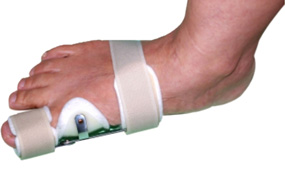
Figure 3: Bunion Splint |
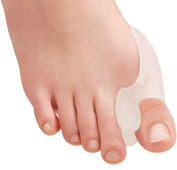
Figure 4: Toe Separator |