From Trauma to
Renewal
He was an elderly man who had survived a devastating
motor vehicle accident with severe abdominal injuries.
An emergency operation saved his life.He survived—against the odds.
Yet six months later, when he returned to the clinic, his
abdomen was visibly protruding and persistently painful.
Imaging revealed a severe post-traumatic abdominal wall hernia.
In a low voice, he said,
“That surgery saved me… but these past few years have
been very hard to live through.”
Standing beside him, his wife wiped away tears and said,
“We’re willing to go through another surgery. We just
want him to live well again.”
At that moment, I was reminded that the work of trauma
surgeons is not only about saving lives—but about helping patients reclaim
their lives.
The Burden of
Abdominal Wall Hernia
An abdominal wall hernia occurs when abdominal organs or
fat protrude through weakened muscle layers.
It commonly develops after trauma or surgery,
particularly when wound healing is incomplete or intra-abdominal pressure
remains high—creating a permanent structural defect.
For patients, this condition leads to abdominal
deformity, weakness, and chronic pain.
Simple daily activities—walking, eating, bending—can become exhausting
challenges.
While not immediately life-threatening, abdominal wall
hernias can profoundly impair quality of life, dignity, and self-confidence.
Traditional
Surgery vs. Robotic Reconstruction
In the past, abdominal wall reconstruction required long
incisions, extensive dissection of the abdominal wall, adhesiolysis, and
complex muscular repair.
These procedures often involved prolonged operative time,
significant blood loss, marked postoperative pain, and recovery periods
extending beyond two weeks.
For elderly patients or those with multiple prior
surgeries, such operations posed substantial physical and psychological
challenges.
In recent years, the Department of Trauma Surgery at Far
Eastern Memorial Hospital has introduced Robotic Abdominal Wall
Reconstruction.
Dr. Chang explains:
“This technology allows us to achieve reconstructions
that once required large open incisions—now through a minimally invasive
approach.”
The procedure typically requires only three to four small
incisions.
Using robotic instruments under a three-dimensional magnified view, surgeons
can:
- Precisely dissect adhesions
- Repair large fascial defects
- Re-approximate and medialize weakened muscles
- Secure mesh to restore abdominal wall tension and integrity
The robotic system replicates human wrist movements with
exceptional flexibility and stability.
As a result, patients experience less blood loss,
reduced pain, faster recovery, and most can be discharged within three
to five days.
Rebuilding More
Than the Abdominal Wall
After undergoing robotic reconstruction, the elderly
man’s large abdominal defect was successfully repaired.
By postoperative day three, he was able to get out of bed
independently.
At follow-up, he stood upright and smiled, saying,
“Doctor, I can walk around the market again.”
That smile is what every physician hopes to see.
Dr. Chang reflects:
“Robotic surgery allows us to bring precision and
minimally invasive principles into post-traumatic reconstruction.
With just a few small incisions, we can help patients return to normal life.
This is one of the gentlest advances in trauma surgery.”
Encouragement and
Clinical Reminder
Abdominal wall hernia is not a trivial condition.
Symptoms such as abdominal bulging, pain, bloating, or
difficulty passing gas or stool should prompt early medical evaluation.
In the past, many patients delayed treatment due to fear
of surgery or the belief that they could simply endure the condition.
Today, with the maturation of minimally invasive and
robotic techniques, surgical repair has become safer, more effective, and
more tolerable.
Dr. Chang encourages patients:
“If you are willing to face the problem, there is a
chance for renewal.
Do not let an abdominal defect become a lifelong burden.
Modern medicine can help rebuild not only the abdomen—but also confidence and
dignity.”
Conclusion | From
Trauma to Hope
In trauma medicine, we race against time—but we also walk
alongside life.
The robotic arms in the operating room are not merely
symbols of technology.
They are extensions of the surgeon—steadier, more precise, and gentler.
The trauma surgery team at Far Eastern Memorial Hospital
believes that
every scar can be mended with expertise and compassion.
From emergency care to reconstruction, we protect not
only life itself,
but also the moment when a patient can once again stand tall and smile as they
return to daily living.
Keywords: Abdominal wall
hernia, abdominal wall reconstruction, post-traumatic rehabilitation, robotic
surgery, minimally invasive surgery, trauma surgery
Figure legends:
A. CT scan showing a large right lower abdominal wall hernia with bowel
protrusion.
B. Preoperative surface marking of the abdominal wall hernia to guide minimally
invasive surgery.
C. Precise docking and setup of the robotic system to ensure optimal surgeon
control during the procedure.
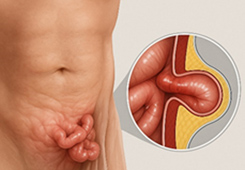
Tomography scan showed a large abdominal wall hernia with exposed intestines in the right lower quadrant.
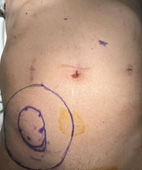
Marking abdominal wall hernias before surgery helps in minimally invasive procedures.
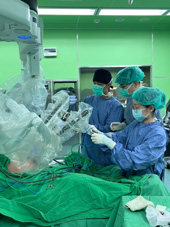
The robotic arm must be set up precisely and accurately to facilitate subsequent operation by the surgeon.